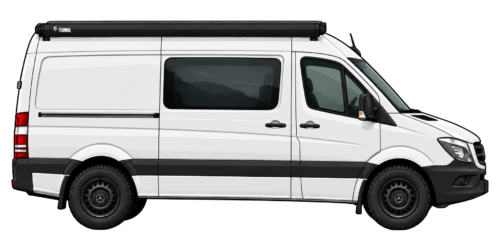

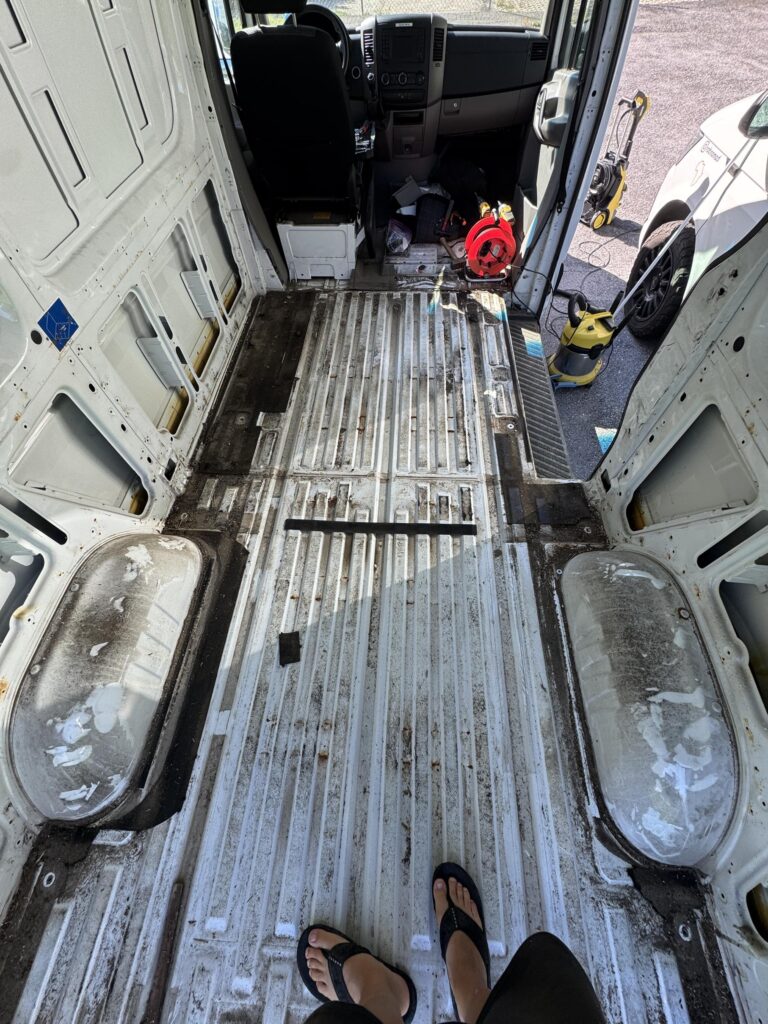
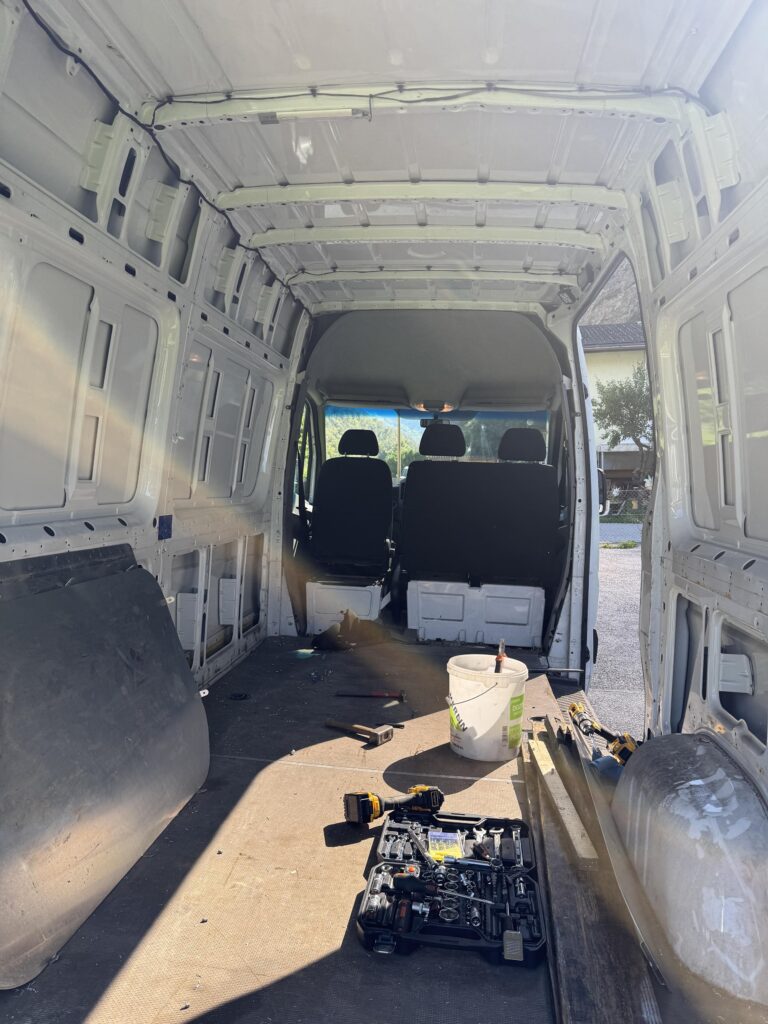
With the interior stripped out, we could finally see exactly what we’d bought.
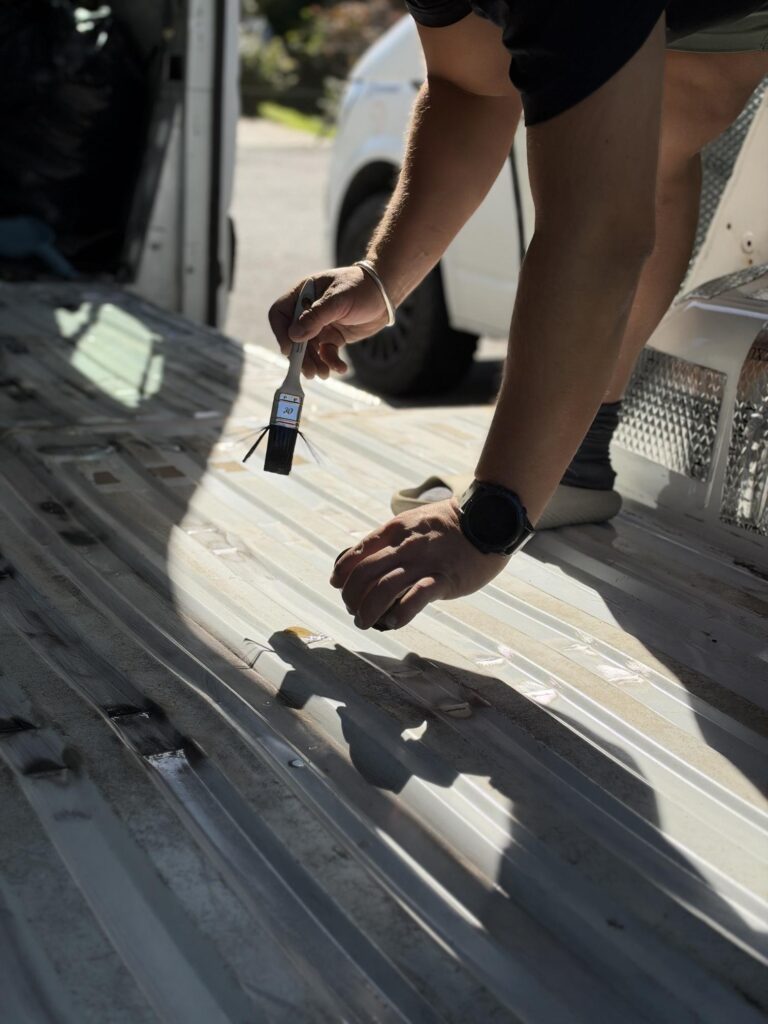
We’d already been pleasantly surprised by the condition of the metalwork, but removing everything also revealed plenty of dirt that had accumulated during Brummli’s previous working life.
Before any sound deadening, insulation or construction could begin, it all needed to go.
A little bit of Brummli history
We’d noticed the faint remains of some old company branding on the outside of the van when we originally found him.
A little digging eventually helped us piece together some of his history.
It turns out Brummli had spent his working life as a tyre delivery van for a family-run tyre business.
That actually explained quite a lot.
It wasn’t a particularly glamorous previous life, but it seems to have been a good one. He had clearly been maintained and looked after, while all that protection in the cargo area had kept the bodywork underneath in fantastic condition.
Now it was time to wash away the last traces of his delivery-van life.
Bringing out the Kärcher
There are certain things that just feel wrong.
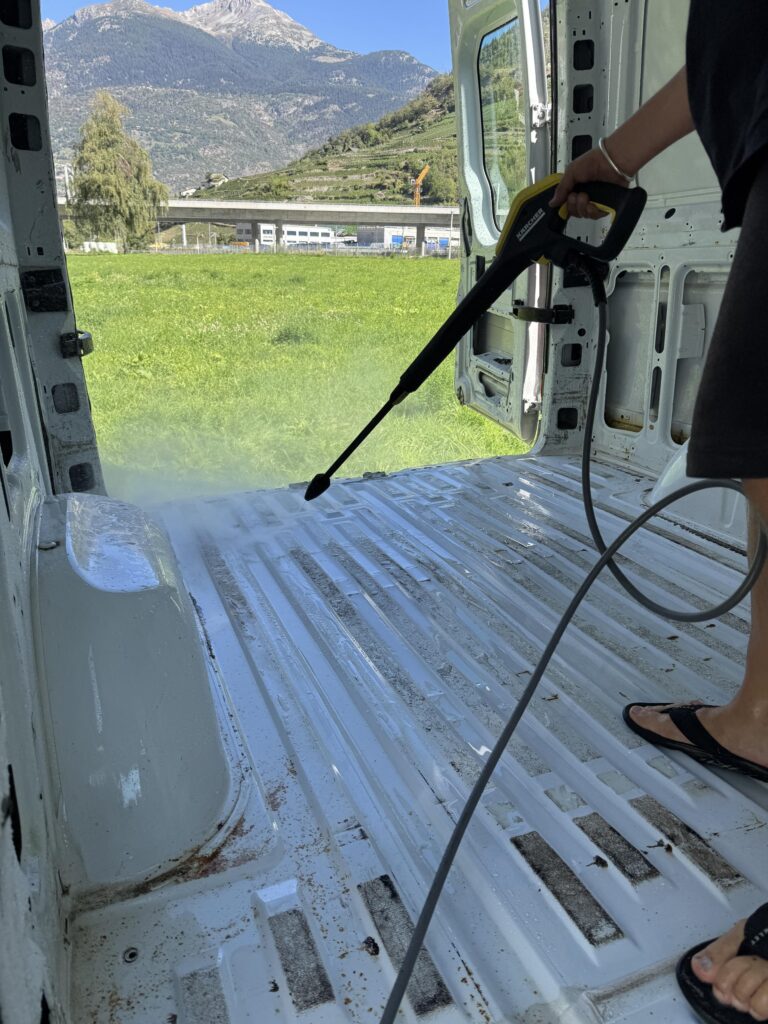
Deliberately taking a pressure washer to the inside of the van you’ve just bought is definitely one of them.
We drove Brummli’s front wheels onto ramps, giving the entire van a slight backwards angle. The idea was simple: anything we sprayed inside should naturally run towards the rear doors rather than collecting somewhere in the middle of the van.
Then out came the Kärcher.
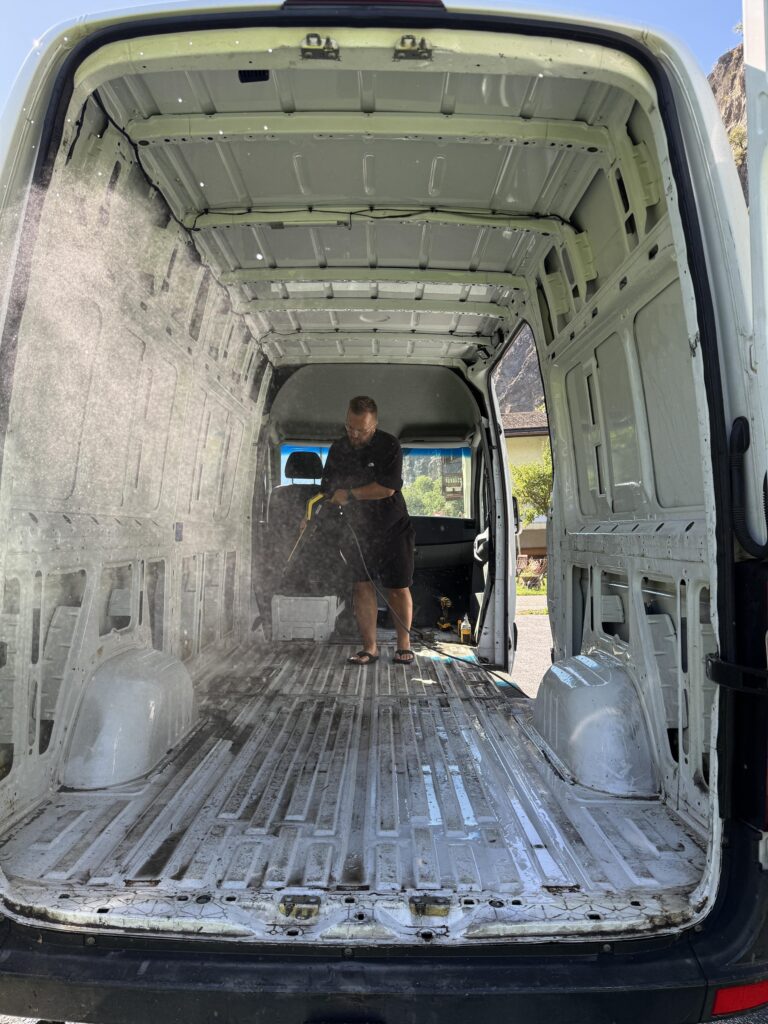
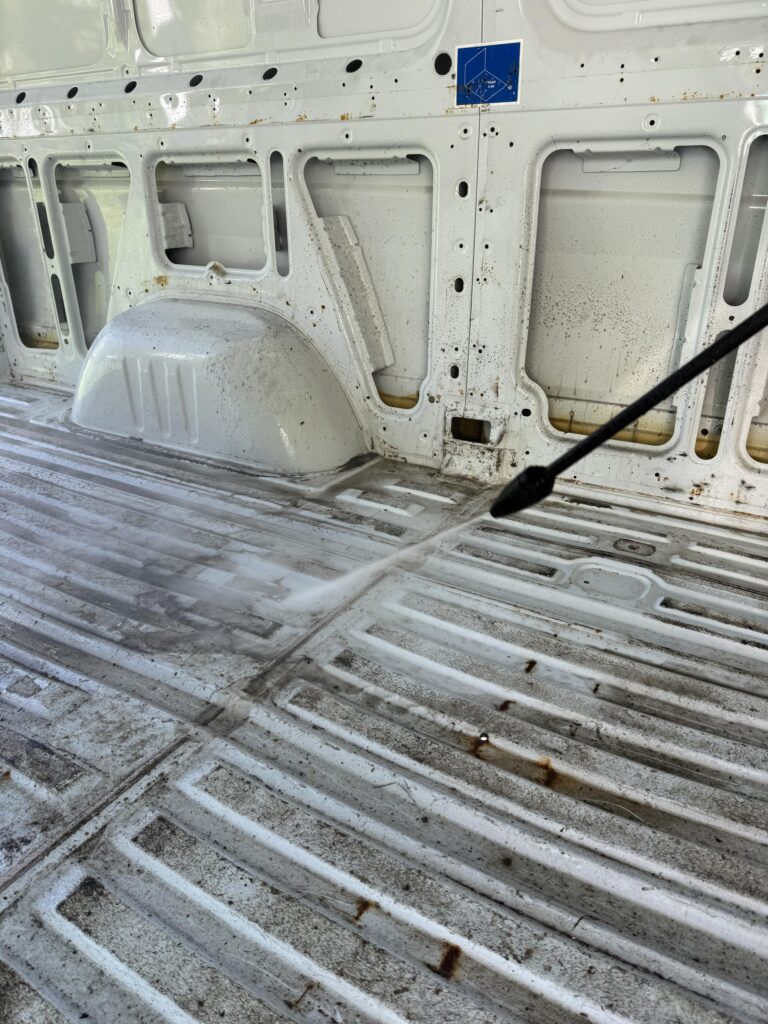
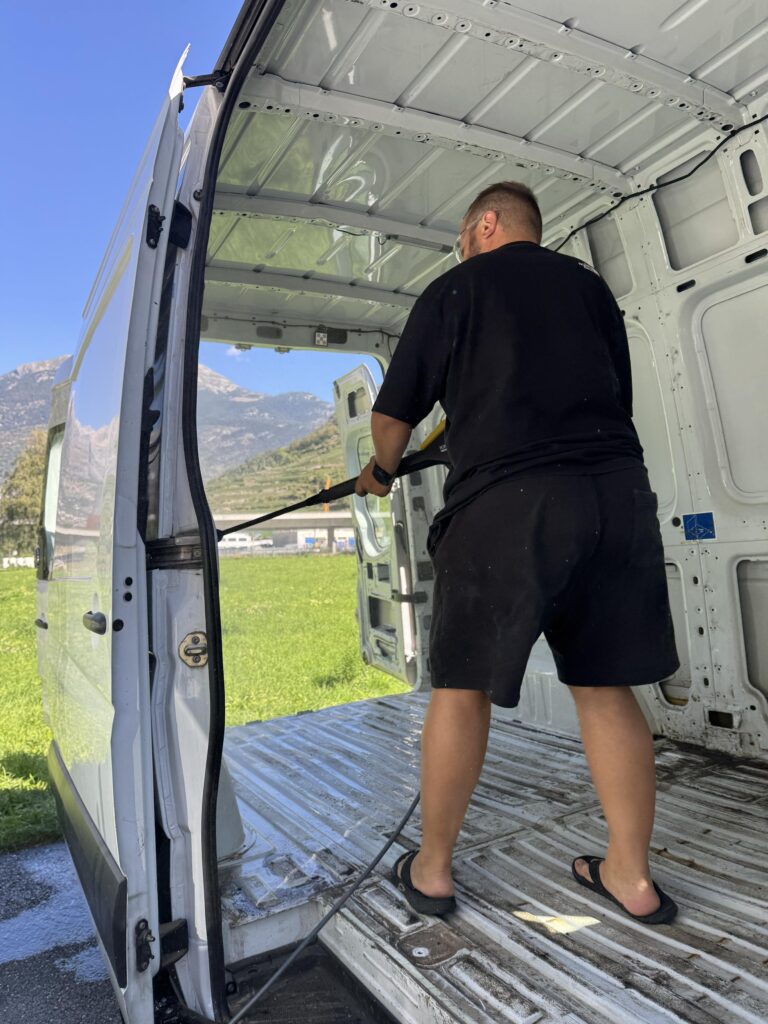
After a little hesitation, we started pressure washing the inside.
There was no turning back now.
Once everything was properly cleaned, we left the shell to dry completely.
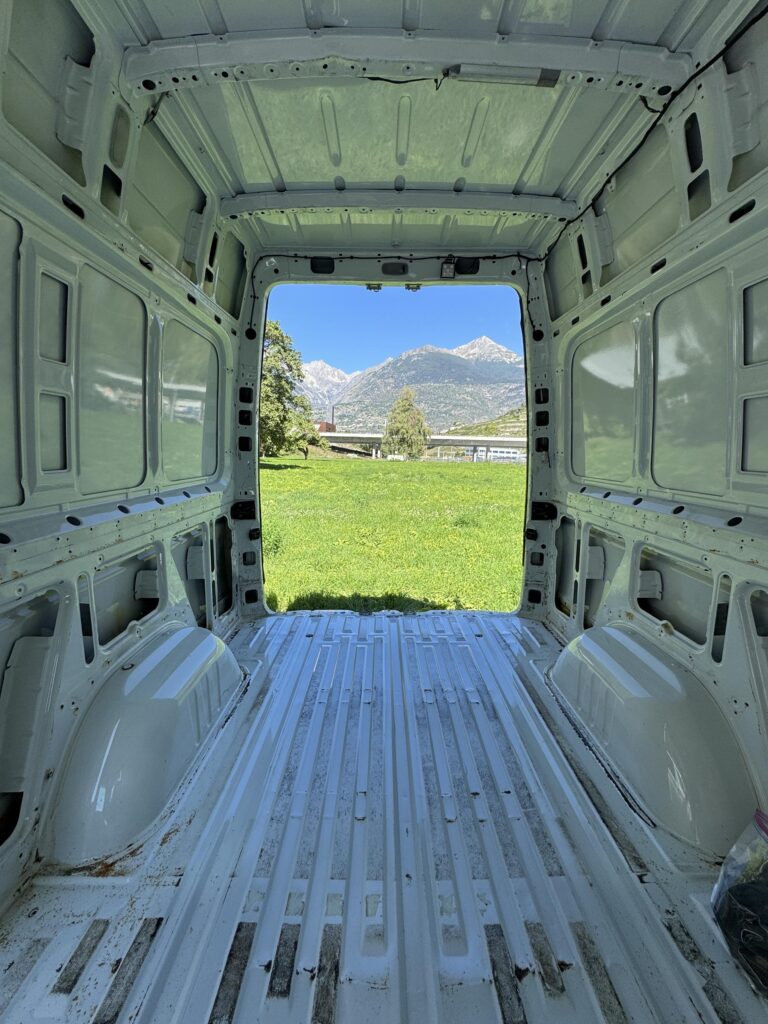
The difference was huge. We finally had a clean, empty Sprinter ready for the first stage of the actual conversion.
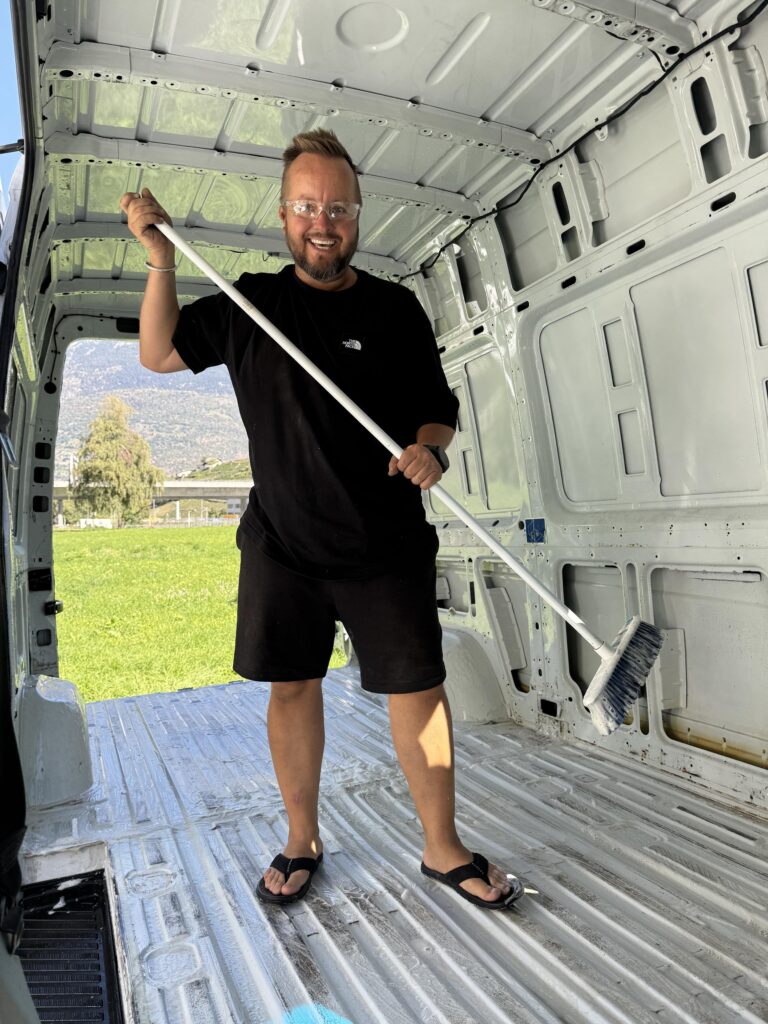
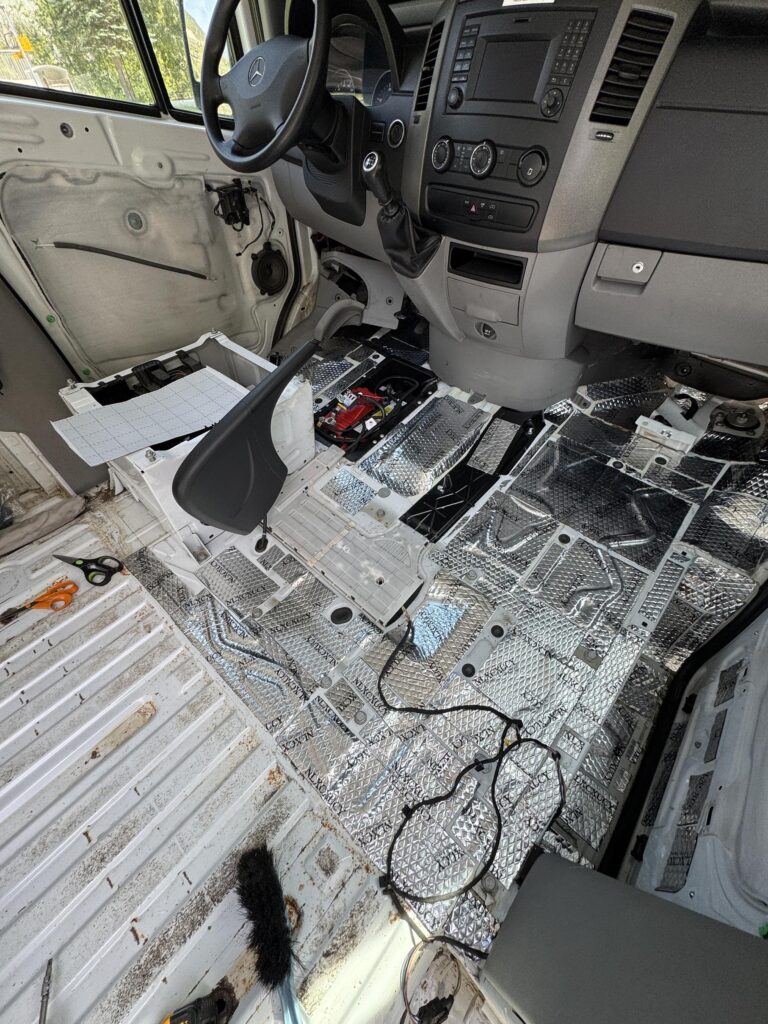
And that meant it was time to start sticking things back onto Brummli rather than constantly removing them.

 Electrical
 Furniture & Layout
 Insulation & Interior
 Strip Out & Prep
 The Van
 Water & Heating
 Windows, Roof & Exterior