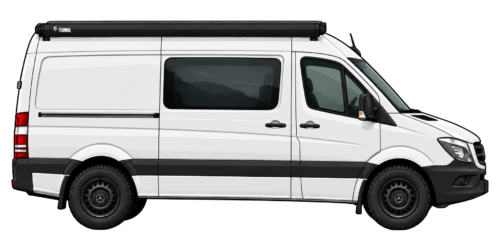

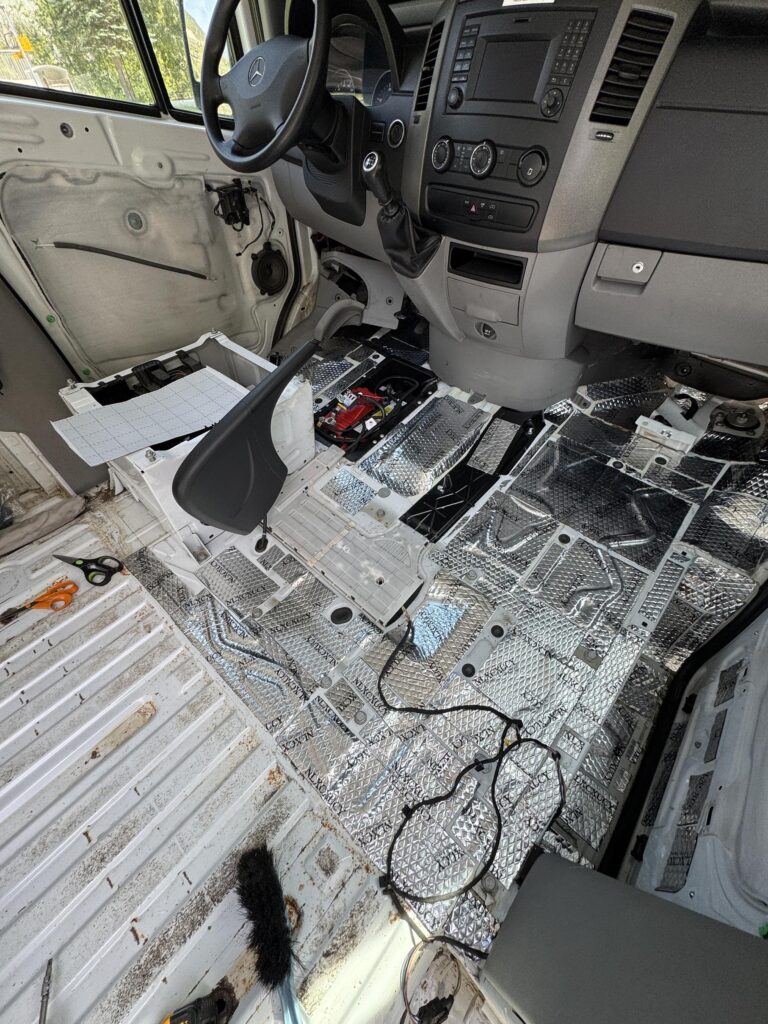
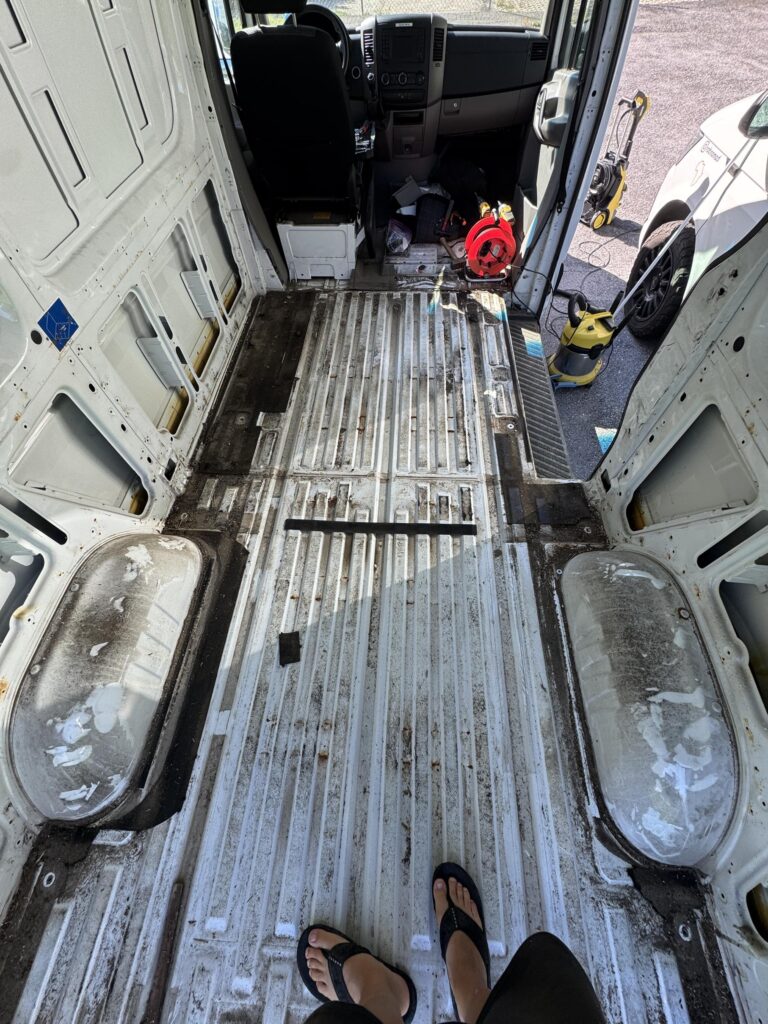
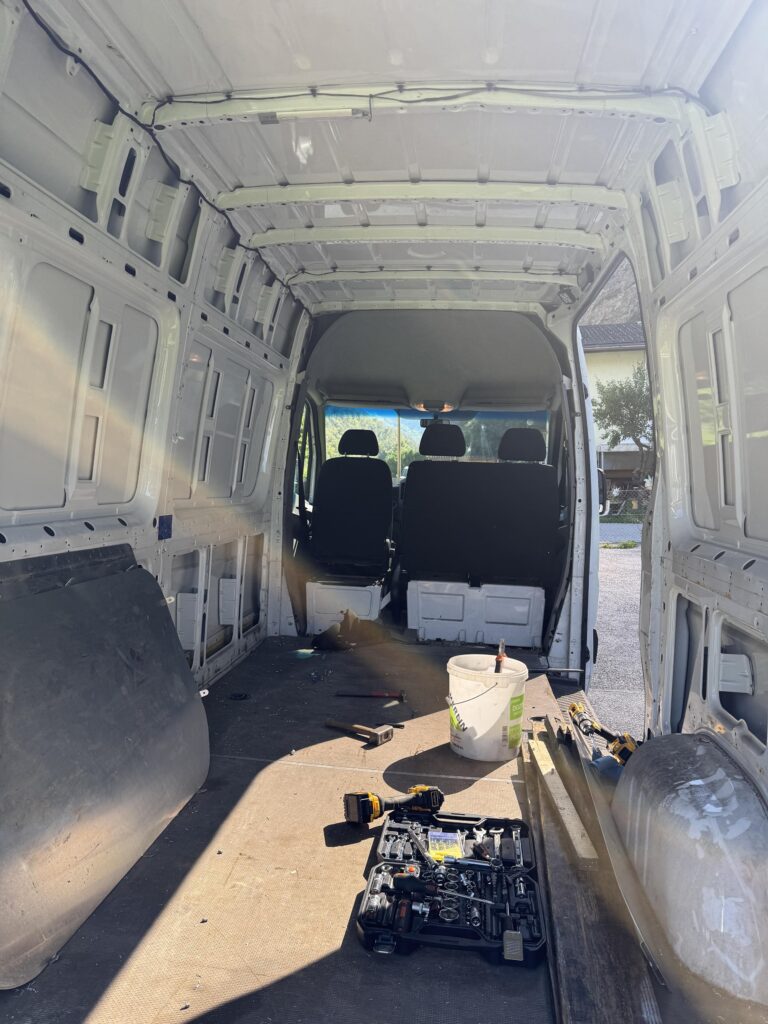
With Brummli stripped, pressure washed and completely dry, we could finally start the first stage of the actual campervan conversion.
Before insulation went anywhere near the walls, we wanted to deal with one of the biggest problems you get with an empty panel van: noise and vibration.
The huge unsupported metal panels on a Sprinter can effectively behave like giant drums. Road noise, rain and vibrations all travel through the bodywork, while sounds from inside the van can travel in the opposite direction just as easily.
Our first layer would therefore be Alubutyl sound deadening.
Something we learned from Nomad
This wasn’t our first time doing this.
When we built Nomad, our VW T6 campervan, we learned just how much difference proper sound deadening can make.
It reduces resonance and vibration through the large metal panels and helps cut down the amount of road and outside noise reaching the living area.
There’s another benefit that doesn’t get talked about quite as much.
It also helps keep noise inside the van.
That’s particularly useful when you’re trying to camp somewhere quietly without advertising your presence to everyone nearby.
Alubutyl isn’t insulation
It’s worth making an important distinction here.
Alubutyl isn’t a replacement for proper thermal insulation.
Its main purpose in our build is controlling vibration and resonance. It does contribute another layer to the overall construction, but we’ll be adding proper insulation separately later in the build.
Having learned the lesson with Nomad, though, sound deadening was one stage we definitely weren’t going to skip with Brummli.
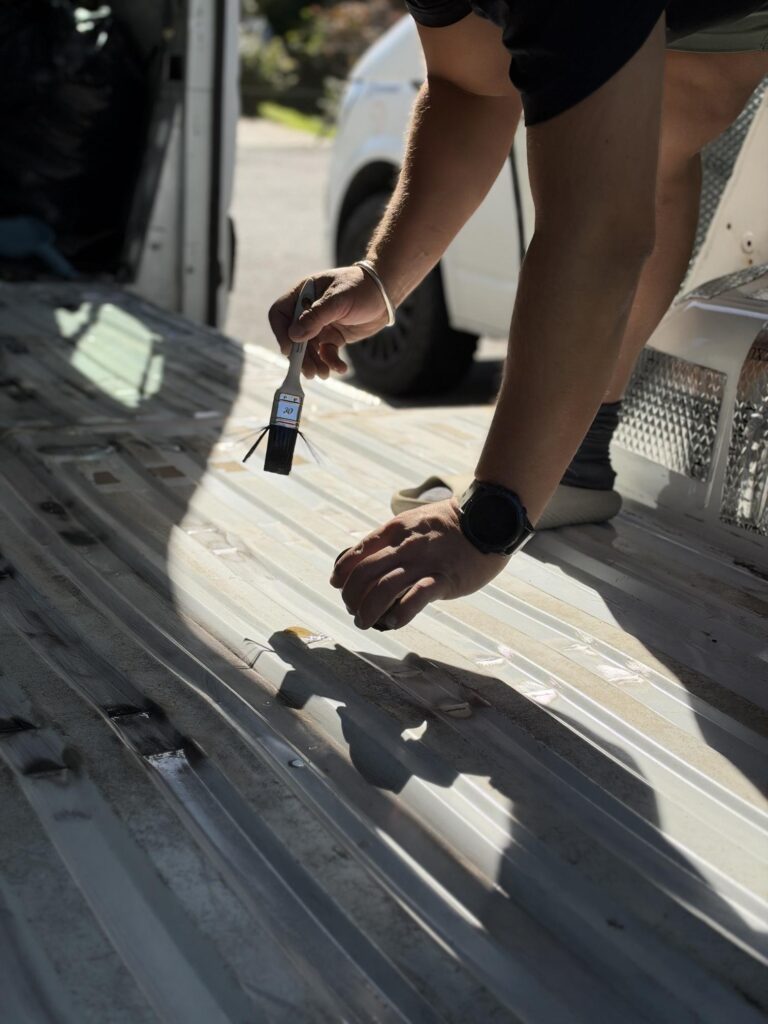
So, panel by panel, the big bare sections of Sprinter bodywork started disappearing beneath Alubutyl.
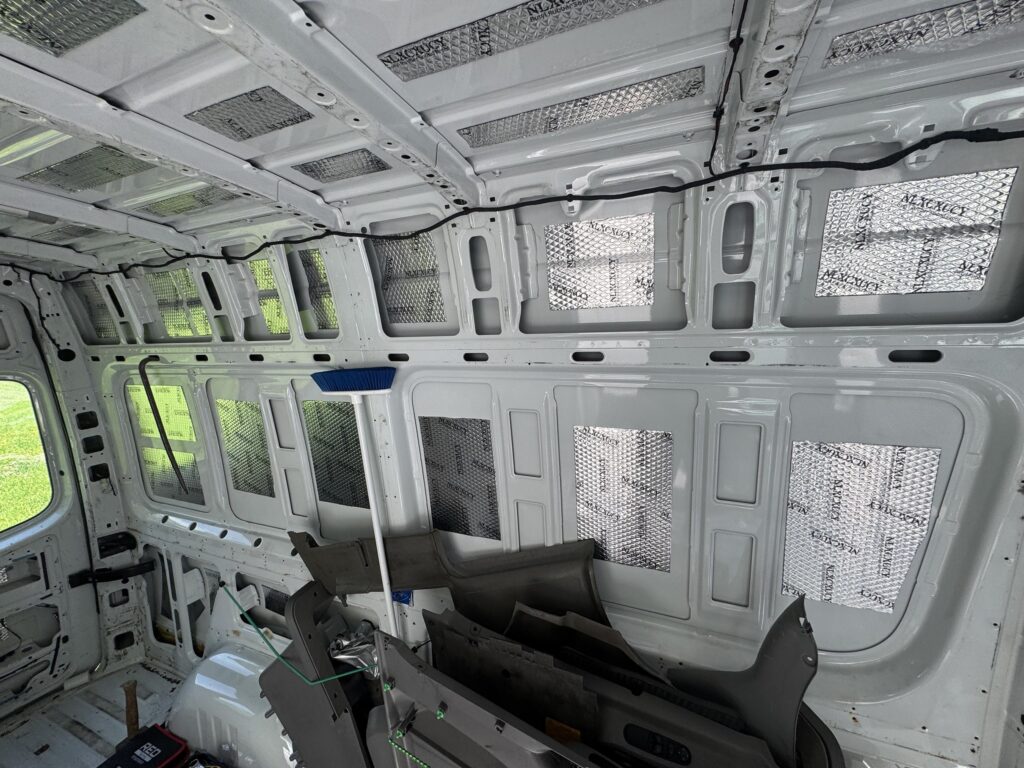
After spending the first part of the project doing nothing but removing things from the van, it was quite satisfying to finally start putting something back in.
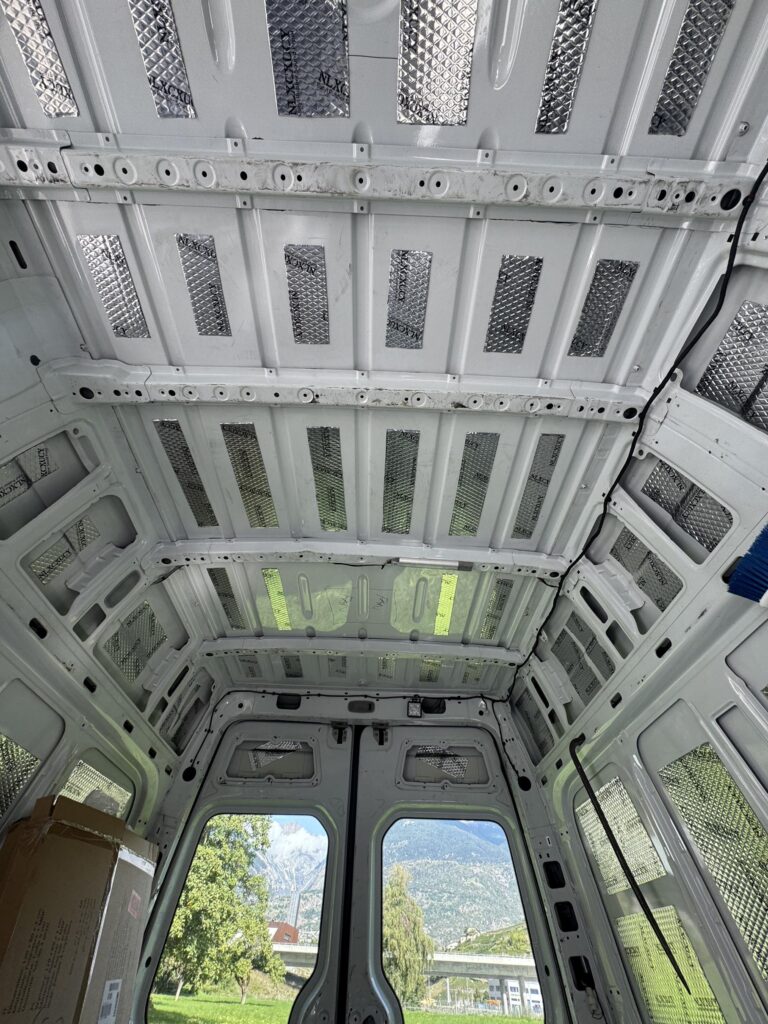
Brummli’s conversion had properly begun.

 Electrical
 Furniture & Layout
 Insulation & Interior
 Strip Out & Prep
 The Van
 Water & Heating
 Windows, Roof & Exterior